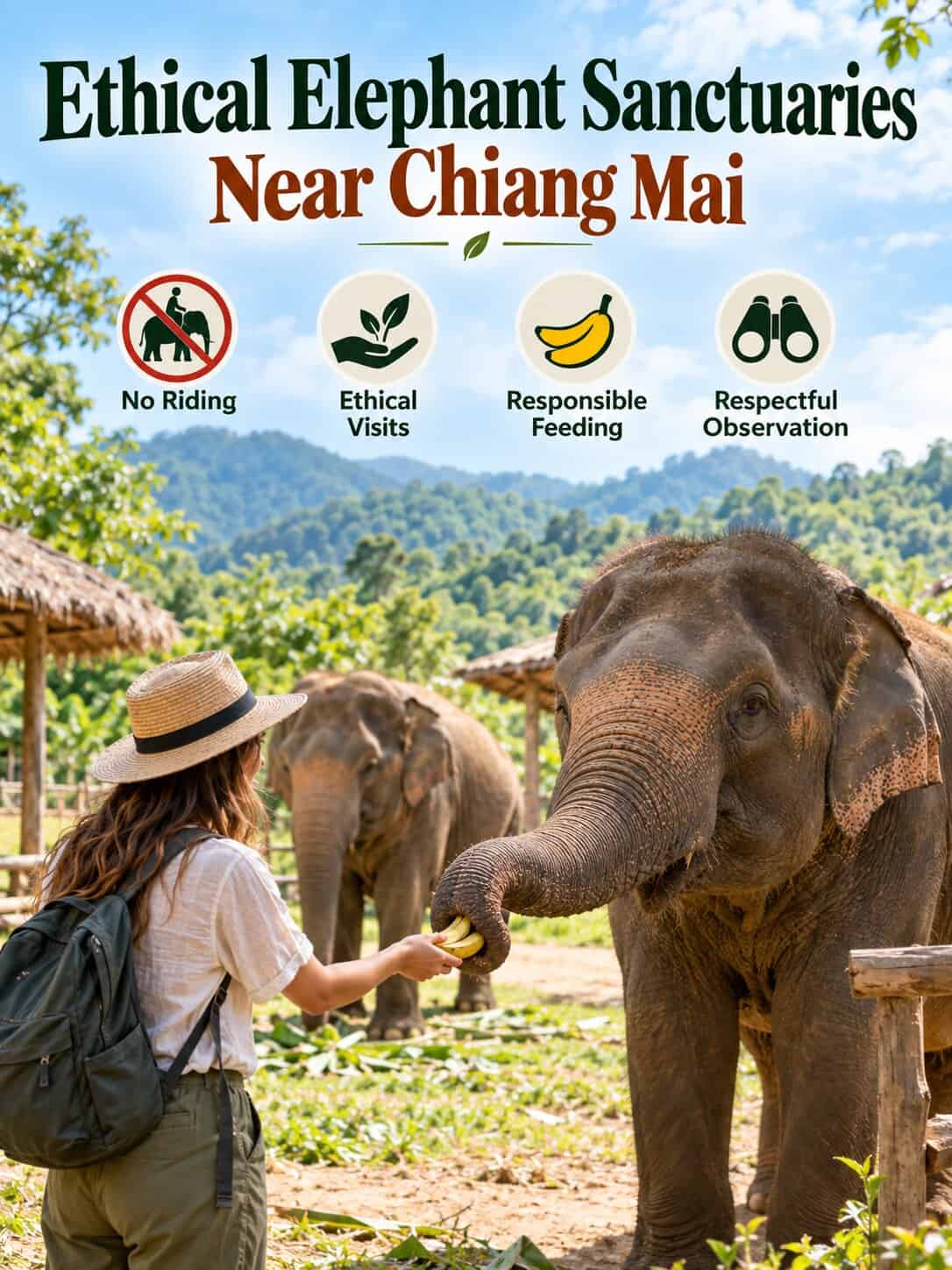
Chiang Mai’s mountains hold dozens of places calling themselves elephant “sanctuaries,” and not all of them deserve the word. A genuine ethical elephant sanctuary in Chiang Mai never allows riding, never uses bullhooks, and centers the visit on rescued or retired elephants living on their own terms rather than performing for tourists. This guide starts with Elephant Nature Park Chiang Mai, the best-known name, then compares the program types and the other sanctuaries with a well-documented hands-off approach.
What Makes an Elephant Sanctuary Ethical?
- No riding, under any circumstance, including “bareback” riding sometimes marketed as gentler than a saddle.
- No bullhooks or ankus carried by staff at any point in the visit.
- No prolonged chaining. Short-term overnight chaining for safety is a debated grey area, so ask directly rather than assuming.
- No forced bathing. Feeding and bathing happen at the elephant’s own pace, with a real option to opt out, rather than being staged for photos.
- A visibly mixed herd that includes older, injured or retired elephants, not only young, “cute” animals.
- A transparent rescue story for each elephant, instead of vague marketing about “care” and “love.”
- Limited numbers and low contact. Even without riding, close physical contact such as bathing and selfies can still stress elephants, which is why the most conservative sanctuaries are observation-only.
Elephant Nature Park Chiang Mai: The Original
Founded by Lek Chailert, Elephant Nature Park is the best-known and most influential ethical elephant sanctuary in the region, widely credited as the model that the rest of the industry follows, or imitates in marketing language alone. It sits in the Mae Taeng valley, roughly 60 kilometers north of the city, around an hour to an hour and a half by road, and its own pages describe a herd that includes blind, crippled, orphaned and senior elephants. For its walking project, the park states that no elephants are tethered or ridden. Most day and overnight programs start with pickup from your hotel or the park’s office, typically between about 7:30 and 9:30am.
Elephant Nature Park Programs
The park lists its programs and prices on its own booking pages. As listed there, the main options are:
| Program type | What it involves | Price as listed by the park (adult, THB) |
|---|---|---|
| Half-day visit (morning or afternoon) | Observing the herd, with the afternoon visit sometimes including the herd bathing in the river | 2,500 |
| SkyWalk (full day) | Includes time at the “Hands Off” project and the herd’s play areas | 3,500 |
| Overnight (2 days, 1 night) | Dinner and park hut accommodation | 5,800 |
| Partner projects: Walking with Elephants, Sunshine for Elephants | Day programs at partner projects | 3,500 |
| Partner projects: Elephant Highlands, Care for Elephants | Single-day programs, adults only | 6,000 |
| One-week volunteer stay | Tasks such as cutting grass, preparing fruit and cleaning shelters | 15,000 |
Children’s prices are lower on several programs, and some programs are adults-only. Prices and programs change, so confirm them on the park’s booking pages for your date.
BEES (Burm and Emily’s Elephant Sanctuary): Hands-Off and Remote
BEES sits in the remote Mae Chaem district, roughly three hours by road from Chiang Mai, and is described by travel sources as strictly hands-off, with visitors not touching the elephants at all. It is smaller than Elephant Nature Park and works mainly through overnight and multi-day stays with basic accommodation, which suits travelers who want a slower, deeper experience rather than a quick day visit. Check its current programs and prices with the sanctuary before booking.
ChangChill: The No-Contact Model
ChangChill takes the ethical model further than most: no riding, no bathing and no hand-feeding, with visitors watching the elephants from an observation deck. It was designated elephant-friendly by World Animal Protection and opened to visitors in 2019, and it is around an hour and a half southwest of Chiang Mai. For travelers who want to see elephants behave as naturally as possible with minimal human interference, it is the most conservative option on this list.
How to Compare Elephant Sanctuary Programs
| Type | What you do | Welfare risk to check |
|---|---|---|
| Observation-only | Watch from a deck or at a distance, learn the rescue stories | Lowest contact, so confirm the elephants are not chained |
| Supervised feeding and optional bathing | Feed fruit and watch or join bathing the elephants choose | Make sure the elephants truly can opt out |
| Overnight or multi-day stay | Help prepare food, walk with the herd, stay on site | Basic amenities; check the sanctuary’s caregiving policies |
| “Be a mahout” or owner-for-a-day experiences | Hands-on bathing, handling and close contact | Highest contact; ask about training history and how choice is respected |
Places to Approach With Caution
Not every place using sanctuary language delivers on it. Some venues that advertise “no riding” still sell close-contact bathing, mud baths and photo sessions as the main experience, and reviewers have questioned the training history of elephants at some hands-on programs. If a place’s marketing emphasizes photo opportunities and physical interaction more than elephant welfare and choice, treat that as a signal to research further, ask the questions above, and read recent independent reviews before booking.
What a Typical Visit Involves
Most ethical sanctuary visits follow a similar shape: a briefing on the elephants’ individual rescue stories, a period of observing from a safe, elephant-led distance, and, at sanctuaries that allow it, supervised moments where the elephant chooses whether to take part. Expect a half-day or full-day commitment with transport and meals typically included. Multi-day options generally involve more hands-on caretaking, with more limited amenities than a hotel stay.
Booking Tips
- Book Elephant Nature Park well in advance in high season (November to February), since popular programs can sell out weeks ahead.
- Read recent reviews, ideally from the last year, because ownership and practices can change.
- If a listing does not clearly state “no riding” and “no bullhooks,” ask directly before booking.
- Multi-day stays cost more but offer a deeper experience than a rushed day trip, especially at remote sanctuaries like BEES.
- Plan the rest of your trip with our Chiang Mai travel guide, where to stay in Chiang Mai and how to get around Chiang Mai.
Frequently Asked Questions
Is elephant riding ever ethical?
No credible animal-welfare organization endorses elephant riding as ethical, including “bareback” riding sometimes marketed as gentler. The physical strain and the training methods used to make elephants compliant are well-documented concerns.
How much does a visit to Elephant Nature Park cost?
Elephant Nature Park lists its programs and prices on its own booking pages, with half-day visits, a full-day SkyWalk and a two-day, one-night overnight stay, and lower child rates. Check the current price for your date there, since programs and partner projects differ.
Can I visit an ethical sanctuary as a day trip from Chiang Mai?
Yes. Elephant Nature Park runs half-day and full-day programs with pickup from Chiang Mai hotels or its office, typically starting in the morning. Some other sanctuaries, such as BEES, are much farther away and are better suited to overnight stays.
Should I avoid any sanctuary that allows bathing?
Not automatically, but be careful. Welfare experts note that visitor bathing and selfies can still stress elephants even without riding. The question that matters is whether the elephant genuinely has the choice, and whether close contact is the main product being sold. The most conservative sanctuaries are observation-only.
What is the most hands-off elephant sanctuary near Chiang Mai?
ChangChill, which is observation-only from a deck, and BEES, which is described as strictly hands-off. Both are reported as elephant-friendly venues, but confirm current policies when you book.
What should I ask before booking an elephant sanctuary?
Ask whether riding and bullhooks are banned, whether elephants are chained, whether bathing and feeding are optional or staged, how the elephants were rescued, and how many visitors come each day.
Where should I stay if I am visiting a sanctuary in the Mae Taeng or Mae Rim direction?
Several countryside resorts covered in our guide to the best luxury resorts in Chiang Mai sit in the same general direction, making it easy to combine a resort stay with a sanctuary day trip.